Ecode Dash Blog
How to hire MLOps engineers: a practical interview framework
A concrete interview framework for hiring MLOps engineers, covering pipeline and deployment questions, monitoring and drift scenarios, Kubernetes and CI/CD trade-offs, and a scorecard that separates production ownership from notebook-only experience.
AI and machine learning roles lead hiring demand in 2026. Ecode Dash market data puts AI/ML engineers at 94%, ahead of Cloud/DevOps at 87% and full stack at 85% (Ecode Dash, 2026). So every team trying to hire MLOps engineers is chasing the same small talent pool. Yet many interviews still reward notebook fluency instead of proof that a candidate has run models in production. This framework gives engineering leaders the questions, scenarios, and scoring anchors that make that difference visible.
Key takeaways
- Structure the interview around four areas: pipelines, deployment, monitoring, and infrastructure trade-offs.
- Ask scenario questions about rollback, retraining, and model drift monitoring, not tool definitions.
- Validate production experience by having candidates walk through a live system they owned, with specific decisions and incidents.
- Demand is intense: AI/ML tops 2026 hiring at 94% (Ecode Dash market data, 2026), so slow vetting loses strong candidates.
- Score every candidate on the same evidence-based rubric. It can reduce inconsistent judgments and make decisions easier to defend.
At a glance
- Demand signal: AI/ML engineers rank first in 2026 market demand at 94% (Ecode Dash market data, 2026).
- Core vetting areas: ML pipelines, deployment, model drift monitoring, and CI/CD for models.
- Biggest red flag: experience that stops at notebooks and offline experiments, with no ownership of a live system.
- Fastest path: pre-vetted MLOps profiles within 48 hours through a staff augmentation partner (Ecode Dash, 2026).
Why does vetting quality matter when you hire MLOps engineers?
When you hire MLOps engineers, you are buying one outcome: models move from experiment to production reliably, safely, and at scale. Strong vetting protects delivery speed, model quality, and compliance. Weak vetting costs months of roadmap progress and can leave risk buried in serving infrastructure.
The market pressure is real. McKinsey found that 72% of organizations had adopted AI in at least one business function (McKinsey, 2024). As adoption spreads, the gap grows between teams that run models in production and teams stuck in prototypes. That gap becomes a competitive disadvantage.
MLOps interviews exist to measure that gap. Some candidates have solid notebook experience but have not owned production systems. Others have done both: they versioned data, automated retraining, shipped behind a canary release, and caught a drift incident early. Your interview must separate notebook-only depth from production ownership without treating notebook work as worthless.
"87% of data science projects never make it into production." (VentureBeat, 2019)
Share on LinkedIn · Share on X
That figure is older, but hiring managers still cite it because the failure mode persists: models that never survive contact with real infrastructure. The right hire closes the gap. The wrong hire becomes another line in that statistic.
What MLOps engineer interview questions should you ask about pipelines?
The best MLOps engineer interview questions about pipelines ask candidates to design a system, not define a term. Have them walk through a training pipeline they built. Then probe the seams: data versioning, reproducibility, orchestration, and failure handling. Specifics signal ownership, while abstraction often signals reading rather than doing.
Strong pipeline questions include:
- Design walkthrough: Describe an end-to-end training pipeline you built. What triggered retraining, and how did you version data, code, and models?
- Failure handling: A step fails halfway through a nightly retraining run. How do you detect it, and what does recovery look like?
- Reproducibility: Six months after a model ships, compliance asks why one prediction was made. Walk me through how you trace it.
- Tooling rationale: Why did you choose Airflow, Kubeflow, or Dagster in your last role, and what would you change?
Good mlops engineer interview questions force candidates to describe decisions, not definitions. Listen for named tools, real failure modes, and honest trade-offs. Strong answers mention data validation gates, feature stores, artifact registries such as MLflow or Weights and Biases, and concrete rollback stories. Weak answers stay abstract and lean on buzzwords.
How do you test deployment and model serving skills?
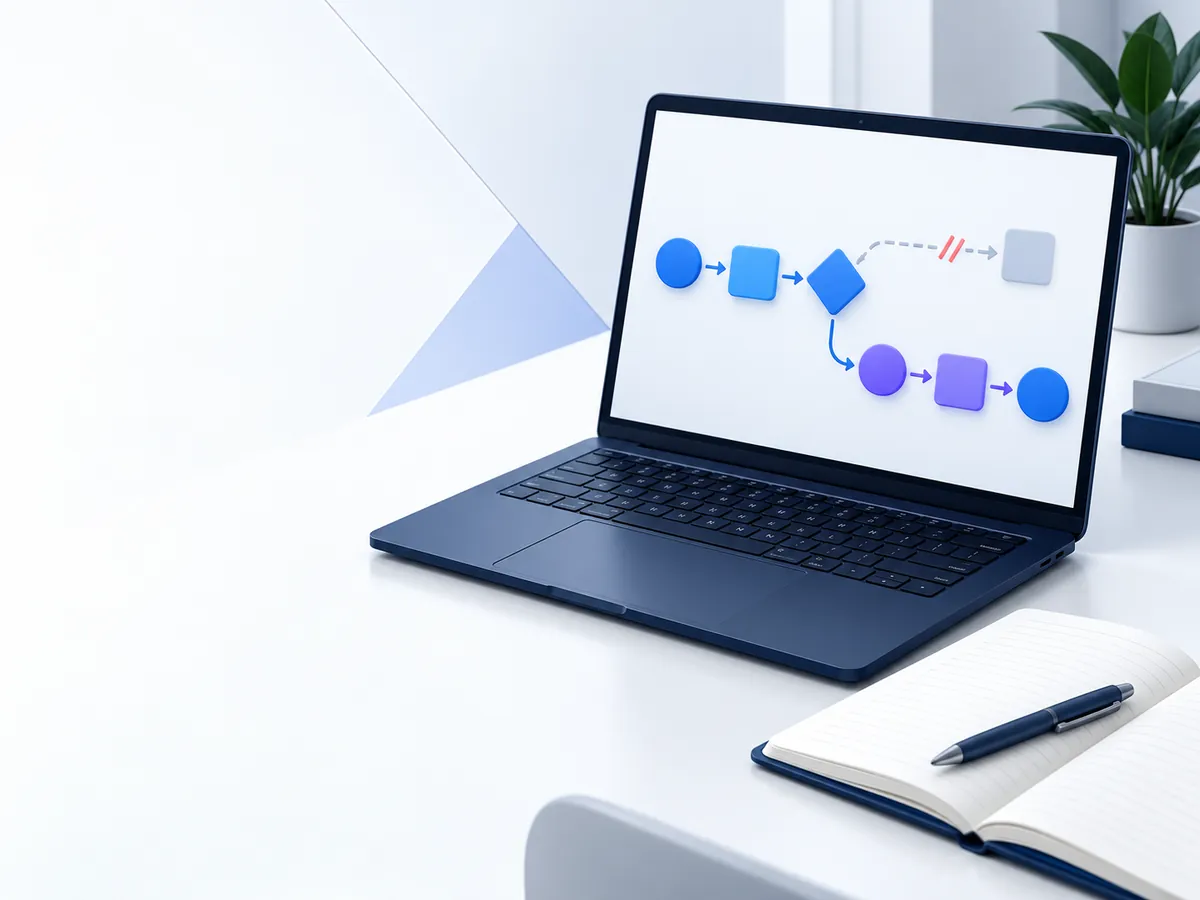
Test deployment skills with a scenario that has no single right answer. Give the candidate a trained model and a latency budget, then ask them to design the serving architecture. Add constraints and watch how they reason. Strong candidates ask clarifying questions before they design anything.
A practical deployment exercise looks like this:
- Present a fraud model that must score transactions in under 50 milliseconds.
- Ask how the candidate would deploy it: real-time endpoint, streaming, or batch.
- Add a constraint, such as a 10x traffic spike during a product launch. Ask what changes.
- Ask how the candidate would roll out a new model version safely.
Strong candidates discuss canary deployments, shadow mode, feature flags, and automated rollback triggers. They explain how they would keep a previous model warm, compare prediction distributions, and route a small percentage of traffic first. Weaker candidates jump straight to a favorite tool before they ask about latency, throughput, cost, or compliance.
What should you ask about monitoring and model drift?
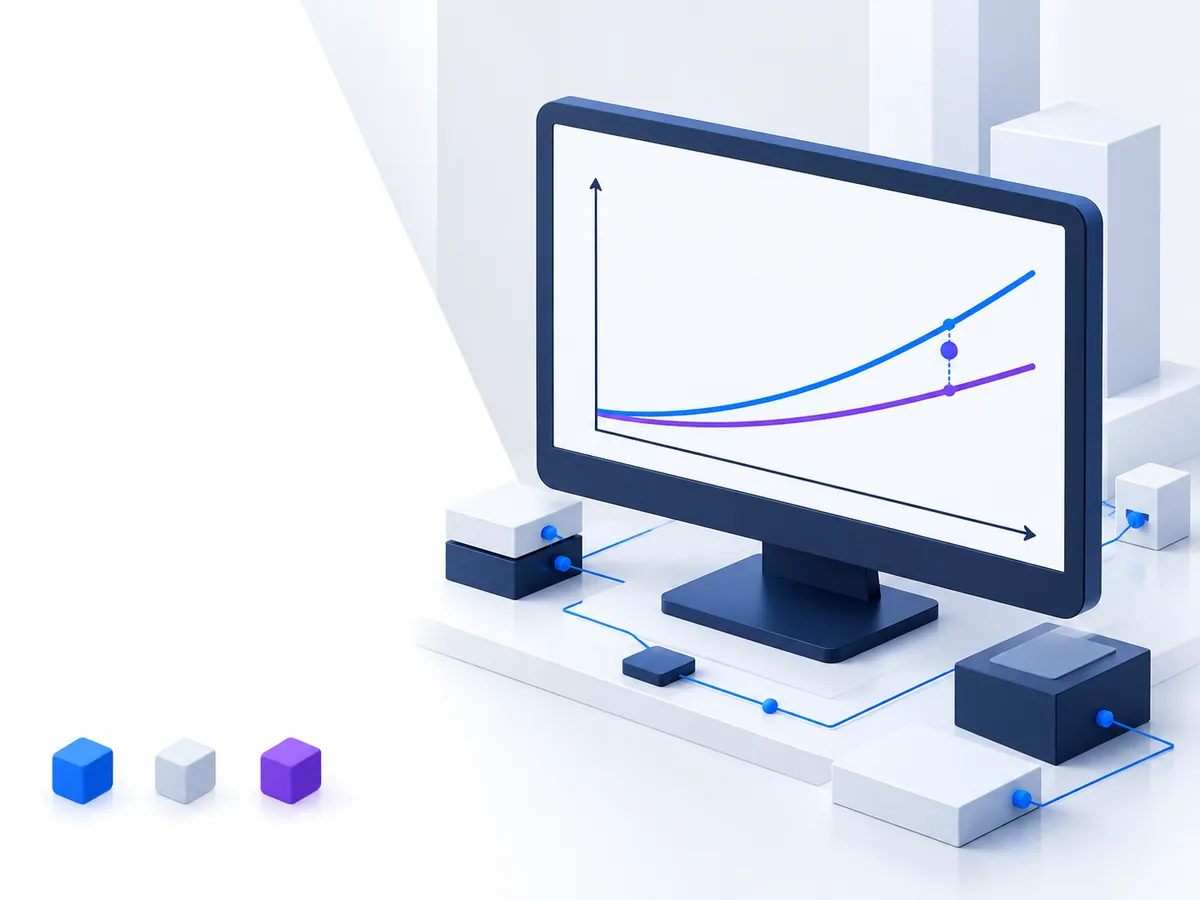
Ask monitoring questions that start from an incident, not a dashboard. Model drift monitoring is where theory becomes operational discipline. You want to hear how the candidate chose metrics, set thresholds, separated data drift from concept drift, and decided when to retrain, roll back, or alert a human.
Use scenarios like these:
- Data drift: Input feature distributions shift after a product change. How do you detect it, and what do you check first?
- Concept drift: Accuracy drops even though incoming data looks normal. How do you confirm the relationship changed?
- Label delay: Ground truth arrives 30 days late. How do you monitor a credit risk or churn model before labels exist?
- Alert fatigue: Your drift alerts fire daily and engineers ignore them. How do you redesign thresholds and ownership?
Strong answers include proxy metrics, delayed-label strategies, population stability index or similar tests where appropriate, and clear escalation paths. They also cover who gets paged, what gets logged, and how retraining is approved. Weak answers list monitoring tools but cannot explain what action follows an alert.
How do you probe Kubernetes, CI/CD, and infrastructure trade-offs?
Probe infrastructure with trade-off questions rather than trivia. The core mlops engineer skills here are judgment: when Kubernetes is worth the operational cost, when a managed service is better, and how CI/CD for models differs from application CI/CD. You are testing whether the candidate can match architecture to team size and risk.
Useful prompts include:
- Kubernetes fit: When would you run training or serving on Kubernetes, and when would you avoid it?
- CI/CD for models: What belongs in a model pipeline beyond unit tests: data validation, model evaluation, bias checks, or approval gates?
- Cost control: GPU costs double after a new model version. How do you find the cause and reduce spend?
- Hybrid stack: Your team uses SageMaker for training and Kubernetes for serving. What breaks first, and how do you design for it?
Many companies that hire ai ml engineers for platform roles overvalue tool checklists. A candidate who has only deployed a tutorial model may know YAML syntax but not capacity planning, secrets management, autoscaling limits, or rollback strategy. Ask for a time they simplified infrastructure. Strong MLOps engineers can explain when boring technology beat elegant tooling.
How do you validate production experience instead of notebook skills?
Validate production experience by asking for evidence of ownership: decisions made, incidents handled, systems maintained, and trade-offs accepted. Do not judge by how fast a candidate answers. Judge by whether they can name responsibilities, constraints, and outcomes that only the owner of a live system would know.
Use a four-area scorecard, scored from 1 to 5, with written evidence required for every score:
- Pipelines: Evidence to look for includes retraining triggers, data and model versioning, orchestration, and recovery from failed runs. Score 1: can describe a notebook workflow only. Score 5: owned scheduled pipelines, can explain lineage, and can describe a real recovery incident.
- Deployment: Evidence to look for includes serving pattern choice, latency or throughput targets, canary or shadow rollout, and rollback. Score 1: has only exported a model artifact. Score 5: chose serving architecture from constraints and led a safe rollout under traffic.
- Monitoring and drift: Evidence to look for includes metric selection, threshold design, delayed-label handling, and incident response. Score 1: says accuracy is monitored after launch. Score 5: detected drift before business impact and changed retraining or rollback policy based on evidence.
- Infrastructure trade-offs: Evidence to look for includes Kubernetes versus managed service reasoning, CI/CD for models, cost controls, and security boundaries. Score 1: repeats tool names without rationale. Score 5: can defend a simple architecture, explain what it sacrificed, and show cost or reliability results.
Have two interviewers score independently, then compare evidence before discussing impressions. This keeps the decision anchored to what the candidate actually did. It also creates a record you can reuse when several finalists look close.
What this means for you
If you lead engineering, growth, or data platform hiring, treat MLOps interviews as production audits, not coding trivia. Build one loop that covers design, deployment, drift, and infrastructure, then require evidence for every score. You will make faster decisions because the signals are clearer, not because the process is shorter.
If your team needs to hire mlops engineer capacity quickly, prioritize candidates who have already owned a model after launch. A candidate who has handled a bad deploy, a silent data change, and a noisy alert stream will usually ramp faster than a candidate with polished demos and no operational scars. That matters more when demand is high and strong candidates leave the market in days.
When timelines are tight, a vetted partner can narrow the field before your interview loop starts. Ecode Dash says it delivers pre-vetted profiles within 48 hours and covers AI/ML, MLOps, data, cloud, and Kubernetes roles (Ecode Dash, 2026). Use that speed to spend your interview time on evidence, not screening. You can explore Hire by Stack for pre-vetted MLOps engineers when you need production-ready candidates without a months-long search.
How long should an MLOps interview loop take?
A practical loop is three to four steps: recruiter screen, pipeline deep dive, deployment or drift scenario, and a cross-functional culture and ownership interview. Compress scheduling so the full loop finishes in one to two weeks, because strong candidates rarely wait.
What is the biggest red flag in an MLOps candidate?
The biggest red flag is no evidence of ownership after a model launched. If a candidate cannot explain monitoring, rollback, retraining approval, or an incident they handled, their experience may stop at experimentation.
Should MLOps engineers know Kubernetes?
They should know when Kubernetes is appropriate and when it is not. Deep cluster expertise matters more for platform-heavy roles, while managed-service teams still need strong reasoning about deployment, scaling, secrets, and cost.
How is CI/CD for models different from CI/CD for software?
Model CI/CD adds data validation, reproducible training, evaluation gates, artifact versioning, and approval for promotion. Code can be correct while the model is still wrong for current data, so release criteria must include model behavior.
Can staff augmentation work for senior MLOps roles?
It can work when the partner vets for production ownership, not just tool familiarity. Ecode Dash positions its model around pre-vetted engineers and 48-hour profile delivery (Ecode Dash, 2026), which can help when roadmap risk is already high.
Related resource
Hiring · AI and Machine Learning · hire mlops engineers · mlops engineer interview questions · hire ai ml engineers · mlops interview questions · mlops engineer skills · model drift monitoring · hire mlops engineer · mlops deployment interview · kubernetes for mlops · ci cd for machine learning