Ecode Dash Blog
IT Staff Augmentation Services: Will Your Project Finish on Schedule?
A practical delivery playbook for keeping staff augmentation engagements on schedule, covering sprint goals, timezone-smart standups, clear ownership, early slippage signals, responsive escalation, and replacement terms.

Missed deadlines in staff augmentation are rarely a talent problem. They are usually a management problem: sprint goals arrive late, ownership is vague, standups ignore time zones, and slippage surfaces in week eight instead of week two. If you are evaluating IT staff augmentation services, the real question is not whether a provider can send engineers. It is whether those engineers will ship on schedule after they join your roadmap.
This playbook covers sprint goals, timezone-structured standups, workstream ownership, early warning signals, responsive communication, and replacement terms.
Key takeaways
At a glance
- Core finding: Delivery risk usually comes from unmanaged process, not weak engineers.
- Sprint rhythm: Use a one-week sprint zero, then two-week delivery sprints. Augmented engineers join ceremonies by day ten and take a full commitment in sprint two, starting in week four.
- Standup format: Use written async updates and one daily overlap window.
- Ownership model: Name one accountable internal owner for every workstream.
- Escalation standard: Confirm response, notice, replacement, and handoff terms before signing.
Will IT staff augmentation services keep my project on schedule?
Yes, provided the engagement runs on written sprint goals, one accountable owner per workstream, and a standup rhythm that fits every location. Augmented engineers work inside your delivery process, so the schedule depends on how quickly that process absorbs them. Fast onboarding and clear escalation separate controlled projects from late ones.
Ecode Dash states that it typically matches clients with pre-vetted talent and can get started within 48 hours (Ecode Dash website, 2026). Treat a fast start as useful only when paired with a delivery plan. Before signing, ask for:
- A named onboarding plan for the first two weeks
- A location map and agreed overlap window
- One owner for each workstream and escalation path
- Written response, replacement, and handoff terms
These items turn a general promise of speed into an operating plan your team can measure.
What does staff augmentation project management involve?
Staff augmentation project management means running external engineers inside your existing delivery system, with the same backlog, sprint rituals, quality standards, and accountability as internal employees. The provider supplies talent. Your organization keeps control of priorities, sequencing, technical decisions, and release timing.
The staff augmentation meaning is simple: you add engineering capacity without transferring management responsibility. Some providers use the label IT resource augmentation services for the same basic model.
The IT managed services vs staff augmentation distinction is about ownership. In a managed service, the provider usually owns a defined process or outcome. In augmentation, your team owns both. Professional services vs staff augmentation is similar: professional services are often scoped around a deliverable, while augmented engineers join your ongoing roadmap.
If you contract with an IT staff augmentation services LLC in Texas, a partner in New York, or an offshore team in India, the contract structure may change. Your need for active delivery management does not.
What does healthy augmented team delivery look like?
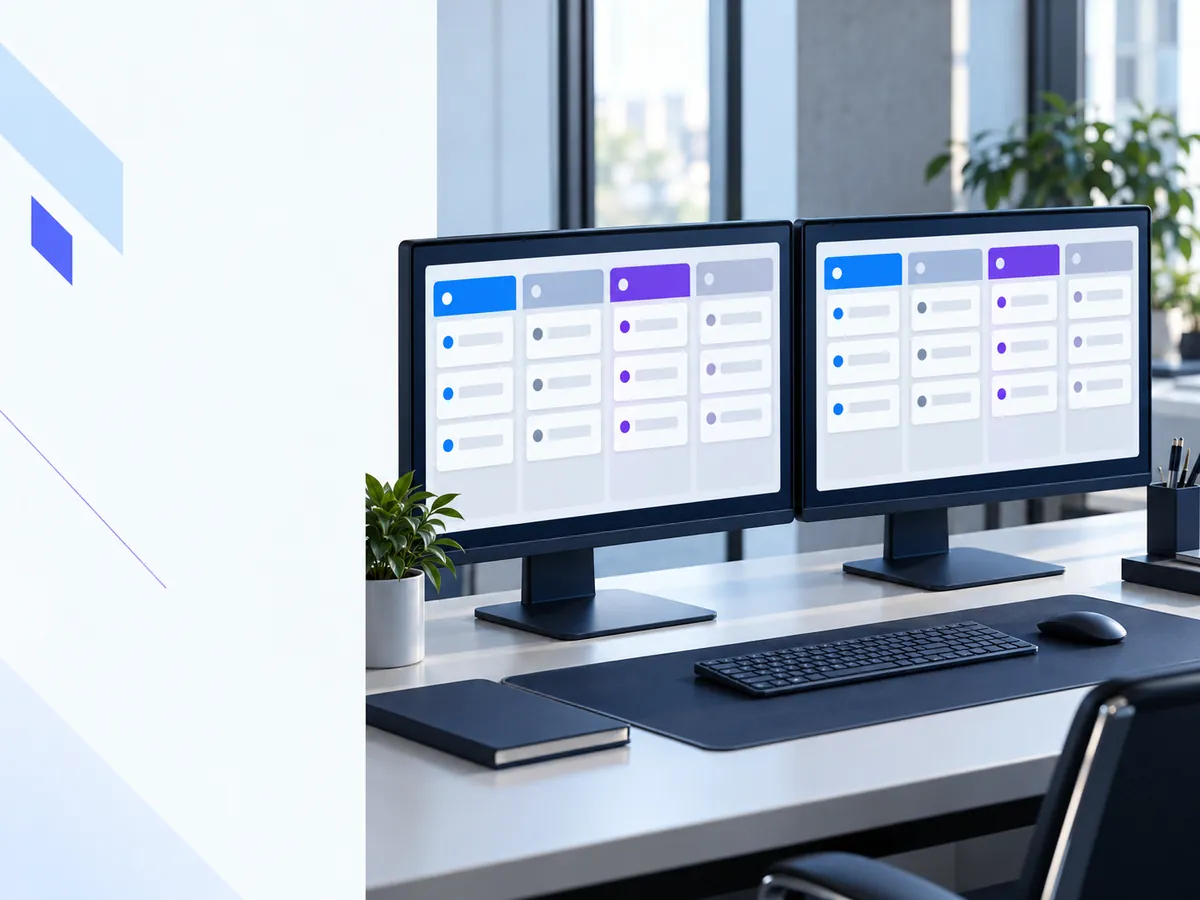
Healthy augmented team delivery looks like one team, one backlog, one sprint cadence, and one definition of done. Internal and external engineers plan together, review together, and escalate blockers through the same path. Separate boards or private status reports make delivery risk harder to see.
Your internal lead should set priorities and accept completed work. The provider's delivery contact should help resolve staffing obstacles, not maintain a separate project plan. Everyone should work from the same source of truth.
How should you set sprint goals with augmented engineers?
Set sprint goals with augmented engineers at normal sprint planning, using a groomed backlog and written acceptance criteria. Give new engineers narrower scope during their first sprint, then move them to a full commitment once they understand the codebase, release process, and quality bar.
A practical ramp looks like this:
- Sprint zero, one week: Provide system access on day one, walk through the architecture, and assign one low-risk production ticket by the end of the week.
- Sprint one, weeks two and three: Assign a scoped story, pair the engineer with an internal reviewer, and expect full participation in sprint ceremonies by day ten.
- Sprint two, weeks four and five: Give the engineer a full sprint commitment, sized from observed velocity rather than hoped-for productivity.
- Every sprint afterward: Review committed work, completed work, carryover, and the reason for every miss.
A useful acceptance criterion names the expected behavior, test coverage, review requirement, and deployment condition. Do not treat a ticket as done because code was written.

How should standups work across time zones?
Use written asynchronous standups as the default and reserve one short live window for blockers, decisions, and dependencies. This structure lets every engineer contribute during local working hours while giving the whole team a predictable place to resolve urgent issues.
Each written update should answer four questions:
- What changed since the last update?
- What will be finished next, and when?
- What is blocked, who owns the unblock, and when is it needed?
- What decision or dependency could affect the sprint goal?
A team spanning California, New York, Texas, and Bangalore can have engineers in India post updates at the end of their local day. US leads can review those updates the next morning and use the agreed overlap window for critical discussion. Rotate any inconvenient meeting time so the same location does not carry the burden every week.
Who should own each workstream?
Each workstream needs one accountable internal owner with authority to make scope, priority, and acceptance decisions. A provider account manager can coordinate staffing and escalation, but should not replace the person responsible for your roadmap outcome.
A RACI chart can help. RACI separates the people who are responsible for work, accountable for the result, consulted before decisions, and informed afterward. Keep only one accountable person per workstream.
Document five items for each owner:
- Scope and exclusions
- Sprint goal and release dependency
- Decision authority
- Acceptance responsibility
- Escalation contact
If procurement asks for an IT staff augmentation services officer, map that title to a real delivery role, usually your engineering lead or delivery manager. A title without decision authority will not protect the timeline.
What early warning signals show delivery slippage?
Delivery slippage usually appears first as repeated carryover, slower reviews, rising cycle time, vague blockers, and reduced confidence in sprint commitments. These signals matter because they give leaders time to correct scope, ownership, or dependencies before the release date is at risk.
Large IT projects run 45 percent over budget and 7 percent over time, while delivering 56 percent less value than predicted (McKinsey & Company and University of Oxford, 2012).
Share on LinkedIn · Share on X
Watch for these signals:
- The same ticket rolls across two sprint check-ins
- Code waits for review longer than the agreed threshold
- Completed story points rise while deployable features do not
- A blocker repeats with no named owner or needed-by time
- Engineers stop giving confident estimates during planning
Consider a hypothetical React Native staff augmentation services engagement. Two mobile engineers may keep missing the same checkout estimate because an internal API owner has not supplied test data. The visible signal is mobile carryover, but the actual schedule risk is an unmanaged dependency.
How do responsive communication and replacement protect the timeline?
Responsive communication protects the timeline by surfacing blockers while there is still time to act. A delayed provider response does not automatically delay launch by the same amount of time, but it can threaten a milestone when the blocked work sits on the critical path.
Set response expectations by severity before work starts. Critical blockers need a named escalation contact and a short response window. Routine staffing questions can follow a longer path. Escalate when a response window is missed, not after the sprint goal has already failed.
Replacement terms matter for the same reason. Ecode Dash states that it replaces a developer who is not meeting expectations quickly and without extra cost (Ecode Dash website, 2026). Because no replacement timeframe is stated, confirm the expected handoff window before signing.
Review the IT staff augmentation services notice clause as well. A long notice period can complicate replacement if the outgoing engineer remains assigned while availability or focus declines. Ask whether notice and replacement can run concurrently, and define who owns knowledge transfer.
What this means for you
For engineering leaders, product leaders, and delivery managers, schedule confidence should come from an operating system rather than a provider's reassurance. Whether you compare IT staff augmentation services in the USA, India, or across both regions, test the delivery model before signing.
Focus on four actions:
- Convert the launch date into sprint-level commitments
- Time-box onboarding and define sprint zero as one week
- Name one accountable owner for every dependency
- Put response, notice, replacement, and handoff terms in writing
Staff augmentation can reduce schedule risk when your team controls the plan and the provider responds quickly. It adds risk when either side assumes someone else is managing the timeline.
Ready to plan your augmented team's delivery?
A consultation can help you pressure-test your sprint ramp, timezone plan, ownership model, and escalation terms before external engineers join. If you are comparing IT staff augmentation services, bring your roadmap and identify where staffing delays could affect critical work.
Schedule a Call with Ecode Dash to discuss your delivery plan.
FAQs
How quickly should augmented engineers start contributing?
A practical ramp uses one week for sprint zero, full ceremony participation by day ten, and a full sprint commitment in sprint two, starting in week four. The exact scope should reflect codebase complexity and access requirements.
What is the difference between managed services and staff augmentation?
Managed services usually place process or outcome ownership with the provider. Staff augmentation adds external engineers to your team while you retain control of priorities, delivery, and acceptance.
What happens if an augmented developer underperforms?
Ecode Dash states that it replaces a developer who is not meeting expectations quickly and without extra cost (Ecode Dash website, 2026). Other providers may use different terms, so confirm timeframes, fees, notice, and knowledge-transfer duties before signing.
How should a staff augmentation notice period work?
There is no universal right notice period. A long notice period can complicate replacement, so ask whether notice and replacement can run concurrently and who owns the handoff.
Can one standup work across the USA and India?
Yes, when written updates are the default and one live overlap window is reserved for blockers and decisions. The schedule should respect local working hours and rotate any recurring inconvenience.
Related resource
Staff Augmentation · Engineering Delivery · it staff augmentation services · augmented team delivery · staff augmentation project management · it staff augmentation services llc · it staff augmentation services notice · it staff augmentation services officer · staff augmentation meaning · it managed services vs staff augmentation · it staff augmentation services in usa · it staff augmentation services in india